

Plan your approach to Level 47
Configuration 1 · Targets, tray management, and time-saving decisions
Your collection plan
Level 47, Configuration 1 has a 3:00 time limit. Your targets are Dice White × 12; Domino55 × 12. There are 144 objects on the board: 24 targets and 120 non-targets. Targets account for 17% of the starting objects.
Step-by-step clearing plan
1. Match your goal icons and 3:00 timer to Configuration 1 before using this plan. Track Dice White (12 objects), Domino55 (12 objects). Compare the full preview for this configuration; object positions can differ.
2. Scan for three accessible objects of one exact target type. The largest workload is Dice White (12 objects); revisit it after each clear, while taking complete triples of other targets when available. Identify all three partners before opening a new set.
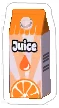
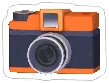
3. If a target is covered, look for a complete removable non-target triple. Common non-targets in this configuration include Juice Orange, Toon Cube Purple, Camera Orange. Clear a set only when it improves access or completes an existing tray pair. Rescan after the pile settles instead of assuming a fixed hidden position.
4. Check the tray after each triple. Finish pairs already started before adding unrelated types. If you cannot identify a third partner, stop opening new sets and compare shapes and color variants with the item icons above.
5. During the final part of the 3:00 limit, read the remaining target counters and narrow your search to those exact variants. Clear blockers only when needed to reach a remaining target; collecting every non-target is not the goal. This is a configuration-based decision plan, so adapt each choice to the visible board.
Where to focus your opening
You have 2 target types to track. Start with a complete exposed triple, then rescan the surface. Choose the type whose third match you can already identify, instead of opening unfinished sets across Dice White, Domino55 at the same time.
Non-targets make up 83% of this configuration (120 objects). When targets are obscured, look for finishable non-target triples that reveal them. Keep each removal purposeful: a single non-target occupies tray space without completing a set. The counts indicate a large distraction pool, but do not establish where any object is hidden.
How to use the time limit
The 24 target objects require 8 target triples. Dividing the 180-second limit by those triples gives 22.5 seconds per target triple if all time were spent on targets. This is a planning allowance, not a measured completion time; searching and clearing non-targets also use that same clock.
Use the available planning allowance for deliberate identification. A hurried wrong variant can consume tray space unnecessarily. Complete existing pairs first, then rescan for another full set; the arithmetic alone does not guarantee that the layout is easy.